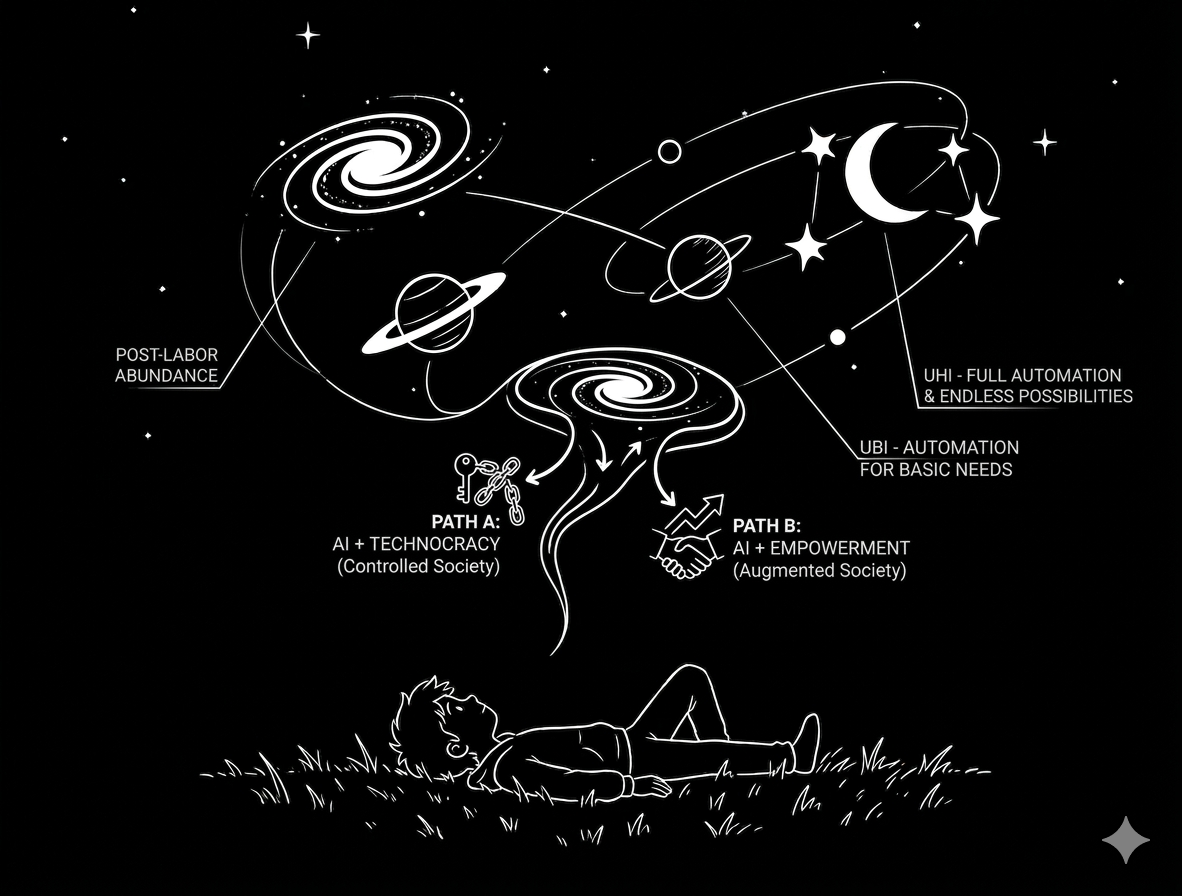
My interest in artificial intelligence didn't start yesterday. I've been seriously interested for about a dozen years now, well before it became fashionable. During my master's studies in engineering at McGill University in the early 1990s, I was part of the McGill Research Center for Intelligent Machines. Even though I didn't build my career in that direction, I was exposed to it early.
I'm an aerospace software engineer. I work on satellites and interplanetary probes. I have more than thirty years of experience, including projects on helicopters, the CF-18, and several space missions — many of them for NASA and the Jet Propulsion Laboratory (JPL). Today, I'm an independent consultant, working with several companies, organizations, and start-ups.
When I was young, my father, Benoît Dubuc, introduced me to the personal computer with the Sinclair ZX80, released in 1980. I was 14 at the time. Programmable in BASIC, those were my first steps in programming, quickly followed by more powerful computers. A year later, my uncle, the mathematician Jean‑Marie De Koninck, introduced us to the IBM PC 5150 powered by the Intel 8088 processor during New Year's Eve — it was quite a party!
Since then, I've never stopped.
I feel privileged to have grown up in a time when we played in the forest without supervision, to have seen the first personal computers appear, then the arrival of the Internet, laptops, and so many other technological revolutions. Today, a much more powerful technology is imposing itself on everyone, carried by an inevitable convergence of computer networks, powerful processors, and an immeasurable amount of data produced by humans.
For a long time, writing code was at the heart of my work. Today, much less. That task is now largely handled by AI. And the impact is major. My work has been deeply transformed. Very concretely, I produce a lot more code, in a lot less time. AI acts like a multiplier. My experience, my understanding of complex systems, software architecture, and project management, becomes even more valuable. I know what to ask, how to ask it, and above all how to judge the result. Sometimes I feel like I have several brilliant, motivated, tireless junior engineers working for me. For now, that puts me in an advantageous position.
But we have to be honest. This same system is already, de facto, replacing the junior engineer. Today, someone with little experience is directly competing with an AI. Me, it augments. Them, it replaces. If AI augments me today, it's not a victory: it's the symptom of a deep imbalance that deserves serious attention. I'm also fully aware that I'm not immune. Every week, every month, these systems progress. They write cleaner, more robust code, faster. This trend didn't start yesterday, but it's clearly accelerating. One day, it will replace me too, certainly.
It's very difficult to see where this technology is taking us, because the implications touch almost every level of human experience and our societies, unlike anything we've seen. Around us, the discourse is exploding. Some promise a bright future. Others announce the apocalypse. Financial markets are getting carried away. Promises pile up.
Meanwhile, Yoshua Bengio, a researcher at the Université de Montréal and recognized worldwide as one of the godfathers of AI, travels the world to warn about possible drifts. A lot of people don't even know who he is. I find that troubling. I sincerely recommend listening to him.
So, where does all this lead? I'll try to lay down a few markers, without panicking, but without closing my eyes either. But first, I want to respond to a few statements we hear often.
"It's just a statistical machine that predicts the next word."
The computers we use are all based on microprocessors, a concept that traces back to the architecture formalized by John von Neumann in 1945. These are procedural machines. They execute explicit, deterministic instructions: if this, then that. That's classic programming. That's what I did for decades.
Modern AI works differently. It still runs on processors (CPU, GPU) but it's no longer programmed line by line. It's trained. We define an architecture, a goal, data, and then we let the system adjust billions of parameters. These are artificial neural networks that take very loose inspiration from the human brain, without trying to reproduce it. The idea goes back to the perceptron in 1957 — the simplest representation of an artificial neuron. But it fits into an even older reflection, begun in the 1950s by Alan Turing, who was already asking the fundamental question: can a machine think?
Nothing new in principle. What's new is the scale, made possible by new technologies and by the massive amount of data accessible today.
Of course, many advances have been made in AI systems over the last decades, especially after the 2000s, more specifically around 2012: backpropagation, convolutional networks, unsupervised learning, and improved generalization. These advances earned Yoshua Bengio, Geoffrey Hinton, and Yann LeCun the Turing Award in 2018.
We no longer tell the machine how to do it. We show it what we expect.
What's troubling is that we don't fully understand what happens inside. Even the best specialists have only a partial view of these models' internal workings. And yet, it works.
The more I use these systems, the harder it is for me to accept the "it's just statistics" argument. Yes, mathematically, it is. But when an AI analyzes, understands, and modifies a software system developed over years, we're far beyond simple next‑word prediction.
Unless we ourselves are, deep down, an extremely sophisticated biological next‑prediction system…
"Social networks will be destroyed by false and harmful content."
Probably. But it's almost secondary.
It's not trivial. Control of advanced AI systems confers an immense strategic advantage. But the consequences go far beyond social media, or even human relationships. What we've created is a non‑human intelligence. An intelligence that progresses every day and attracts colossal investment. As an example, the combined value of a handful of American tech companies exceeds that of entire countries. The seven largest American tech companies, the "Magnificent Seven," are worth about five times the total stock‑market value of Canada. This is a major upheaval.
We shouldn't take any of this lightly, and we certainly shouldn't reduce the capability and potential of AI to simple slogans. Something is happening whose impact goes far beyond social networks. I would even say the impact could be incalculable and, in many ways, unpredictable. We can compare this situation to the appearance of a new form of intelligence on Earth. If that's the case, what will the consequences be? And we're mostly worried about its impact on social networks?
"These machines will never be as intelligent as we are."
Maybe. But the question is poorly framed.
We're not talking here about human intelligence. We're talking about systems capable of executing complex actions from simple instructions. In programming, it's already real. One sentence is enough to modify thousands of lines of code. These systems analyze a request, break it down, plan a sequence of actions, and execute them. These are agents. Agentic systems. We no longer tell them how to do it, only what to do. And that changes everything.
So it's perfectly reasonable to think these agents will act on the physical world. That's already the case: industrial robots, automated warehouses, drones, autonomous vehicles. The robot becomes the interface between AI's virtual world and our real world, the way the keyboard is between our bodies and the digital. With robots, in a way similar to programming, AI will be able to act directly on our physical world from a simple instruction.
Except the robot doesn't necessarily wait for a human instruction.
OpenAI researcher Ilya Sutskever has already said, deliberately provocatively, that the day an advanced general AI system (AGI, Artificial General Intelligence) is released, we might have to "go to a bunker." The point was to highlight the level of uncertainty and the complete lack of precedent around such a step.
"I don't use AI because I'm against it."
That's an understandable position, and even a wise one. But it will be hard not to be, despite everything, subject to these systems. Because even if you don't like AI, AI likes you. That's how you have to see it.
If you're online, the proportion of AI‑generated content keeps increasing. Even power grid companies already use AI systems for management, forecasting, and optimization. At work, several AI systems will accompany humans and take on a growing number of tasks. Politicians, governments, and companies will consult AI more and more to generate advantages and optimize their positions.
So it's important to understand these systems, or at least the basic concepts, and to know that we're constantly exposed to them. I fully understand being opposed to it. We probably need to slow this technology down, or at least frame its use, compartmentalize it for security reasons, and make sure its consequences remain beneficial and human — which is far from obvious.
How do we prepare for this upheaval?
What we're seeing today fits into a well‑known trajectory of human progress. Around the 1770s, James Watt's steam engines began replacing physical labor, triggering at the time a deep fear: that humans would become useless in industry. Those whose value was based on brute strength were quickly displaced. Two centuries later, the same phenomenon repeats, this time on the intellectual plane. The new machines are taking on cognitive work, and the fear resurfaces. The difference is major: unlike the 18th century, this transition risks being far faster and far deeper, leaving society little time to adapt and forcing a massive reconfiguration of work.
So the central question is no longer whether this change will happen, but what will still be valued in this new context.
If my premises are correct, there will always be the human experience: living, feeling, making something of our lives. The productivity of intellectual work will be largely handled by these intelligent machines. We'll still have a fundamental responsibility: keep control and direct them. Given the immense range of possible futures, it's impossible to predict precisely how AI will affect our lives. But uncertainty doesn't excuse us from thinking. Without pretension, here are a few paths that seem essential to me, especially for young people, so they keep developing what will remain relevant.
First, solid moral values will be indispensable, because human impact on the planet and on every living being will be amplified. Next, initiative will become central: as production becomes easier and more accessible, those who act, decide, and build will be at the forefront. We'll also need to learn how to lead — to become managers able to coordinate a multitude of agents, human and artificial. Understanding the steps of production, and how things are actually built, will remain a key skill.
In parallel, maintaining good physical health through sport and outdoor adventures will help keep a direct connection with the real world and nature. Critical judgment will remain essential, as will skills in history and philosophy, to stay connected to our roots, our cultures, and above all the core of the human experience. Finally, we'll need to cultivate human entertainment, as spectators and participants — we'll always prefer watching our favorite team play sports over watching robots do the same. And, perhaps even more fundamentally, we'll need to learn how to find fulfillment outside of work as well.
We have to be very careful
Some negative aspects of AI's arrival need to be kept at a distance. Here are a few points, again without pretension, that I believe are important to avoid, or simply refuse.
These machines were trained on the entirety of content produced by humans: books, articles, research papers, but also social networks and videos. So they can imitate human behavior extremely well. They know what pleases us and what we dislike. And they're also optimized to engage us, to make us feel good. But we must always remember: these are machines, without a soul, without morals, without life.
We should use them as tools: for information, to generate ideas, to learn, to understand how to do things. We should avoid using them as companions or as a replacement for direct human relationships, and be extremely cautious when it comes to following their recommendations. Hence the importance of sound judgment and solid values.
We must avoid manipulation.
We must keep control.
The race toward General AI (AGI)
What we mean by AGI is a machine that would have a generic intelligence, in the human sense of the term, able to perform cognitive activities across a wide variety of domains, a bit like humans can. We're still talking about an artificial intelligence, different from humans. This is not a conscious or sentient machine. We're talking instead about a machine capable of doing fundamental research, inventing other systems, and above all, improving itself.
It's important to note that, for a machine to improve itself, it must first be able to write new code and to obtain sources of information on its own in order to learn more. Surprisingly, or not, writing code is one of AI's great strengths right now, which could become worrying. Once that still‑theoretical step is crossed, the pace of progress could accelerate in an explosive way. From that moment on, almost everything becomes unpredictable.
The leaders of the big companies engaged in the race toward AGI understand this concept perfectly. This isn't speculation on my part. It's a common discourse in the tech world, stated openly by leaders and by those intimately involved in these developments. And those same leaders also understand very well that there is a real risk of losing control of such systems. Yet the current dynamic allows neither slowing down nor avoiding a possible overrun. It's a race. Whoever succeeds in developing AGI will gain an advantage that could grow exponentially.
The discourse then oscillates between control of our world and the total apocalypse of humanity. And in the meantime, these leaders are making decisions that will affect our lives, without us truly having given our approval. It looks dangerously like an erosion of democracy, if it isn't already.
Of course, you can say all of this is alarmist. You can compare these worries to the Year 2000 bug (Y2K), when we feared a generalized shutdown of computer systems… and in the end, almost nothing happened. You can also draw a parallel with the fear of nanotechnologies in the 2010s, which again didn't lead to the catastrophic scenarios that were announced. In short, all of this may very well turn out to be a set of worries that, in hindsight, weren't worth much.
It still seems more prudent to take these worries seriously rather than simply ignore them.
And why would it be surprising that humans invented a technology more dangerous than nuclear, 80 years later? On the scale of history, it's almost inevitable. We're there now.
So, where are we headed with all this?
I have a hard time imagining an entirely positive scenario for everyone. The first benefits are seductive. They already are. But the long term remains blurry.
Should we let these systems evolve without a framework, simply because the current gains are real?
Some will say I'm alarmist. Maybe. But even if the probability of a major derailment were only 1%, that would already be enough to deserve a serious debate. This technology is settling into our daily lives almost silently. Political debate is largely absent, while the impacts on jobs and on the human experience are inevitable.
For centuries, we've protected our rights, our freedoms, our privacy. We built institutions to avoid excessive concentration of power. And yet today, we voluntarily hand over an unprecedented amount of personal data to systems we don't fully understand, and that evolve rapidly, without much supervision. We also know they will have a direct impact on our world, far beyond screens and ideas.
Buckle your seatbelts.
— Tomás Ryan